Technical summary: When should you replace your fittings? To prevent structural damage to your furniture, replace the fittings if you notice:
- Misalignment: The 3D adjustment no longer works.
- Noises: Metal-on-metal friction in the bearings.
- Soft-close failure: The piston has lost pressure.
- Rusting: Corrosion present on hinges or runners.
- Stiffness: Mechanical resistance when opening or closing.
The kitchen is the room in the home that suffers the most mechanical wear and tear. We open and close drawers and cupboards an average of 30 times a day. We can tell you that the fittings aren’t just an accessory, they’re the heart of the cabinet.
If you ignore the signs of wear and tear, what is just a slight noise today will be a cabinet side split open by the strain tomorrow. Here is my professional checklist to help you know when to call it a day.
1. Persistent misalignment (The end of 3D adjustment)
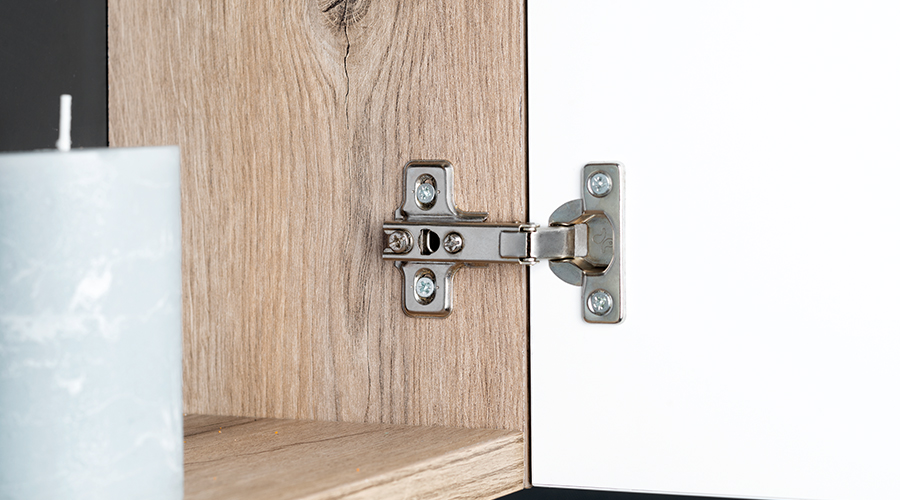
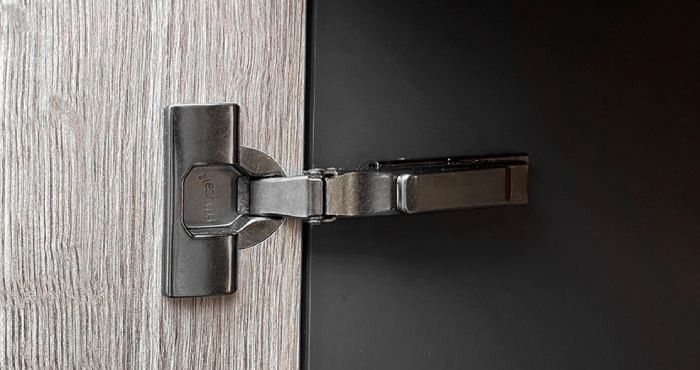
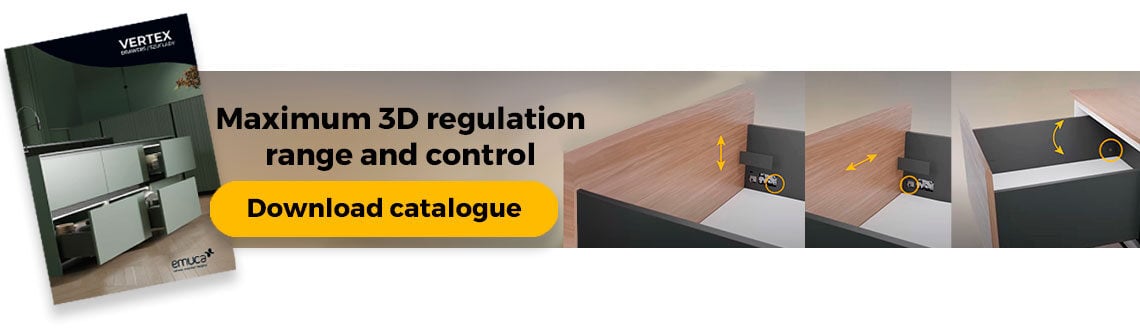
Almost all modern hinges feature three-dimensional adjustment (height, depth and side-to-side adjustment).
- The warning sign: If you notice that a door is sagging and, after adjusting it with a screwdriver, it becomes misaligned again within a week.
- Why this happens: This indicates that the adjustment screws have lost their thread or that the mounting plate (the part screwed to the side) has ‘flared’ holes. The metal has given way and the fitting no longer has any load-bearing capacity.
2. The “squeak” of the bearing: Noises and friction
A high-quality drawer runner should be silent. If you hear a metallic squeak or a ‘scraping’ sound when opening a full-extension drawer, the situation is critical.
- The warning sign: A dry grinding sound, even after cleaning the runners.
- The technical diagnosis: The steel ball bearings have lost their factory lubrication or have become deformed. This creates friction that wears down the runner profile, releasing metal shavings that can contaminate the contents of the drawer.
3. Fault in the soft-close mechanism
Soft-close mechanisms revolutionised the lifespan of furniture by preventing structural impact.
- The warning sign: The drawer or door slows down for a moment but then slams shut, or the mechanism simply gets ‘stuck’ and fails to close automatically.
- The risk: When the hydraulic piston in the fitting loses its fluid, the impact of the closure is transferred directly to the chipboard structure, loosening the furniture’s joints. If your soft-close system fails, replace it before the impact breaks the cabinet’s bracket.
4. Galvanic corrosion and pitting
In the kitchen, steam and cleaning products can be harsh.
- The warning sign: Small black or reddish spots on the hinge body or on the gas spring arm (in wall units).
- Why it’s urgent: Rust isn’t just a cosmetic issue. In gas springs for drop-down cupboards, corrosion on the rod destroys the pressure seal, causing the door to slam shut, which poses a safety risk to the user.
5. Mechanical resistance or the ‘spring effect’
Do you feel you have to use extra force to start the opening movement?
- The warning sign: The fitting offers unusual initial resistance and then suddenly gives way.
- The diagnosis: This is usually caused by deformation of the hinge arm or a misalignment in the click system of the cup. The fitting is operating under a strain for which it was not designed, causing the steel to fatigue to the point of failure.
Technical conclusion
Don’t wait until a door falls off its hinges. Replacing a cup hinge or a telescopic runner in good time costs a fraction of what it costs to repair a torn-off cabinet side. If you’ve ticked more than two items on this checklist, it’s time to replace your fittings with systems that are certified for opening cycles.